


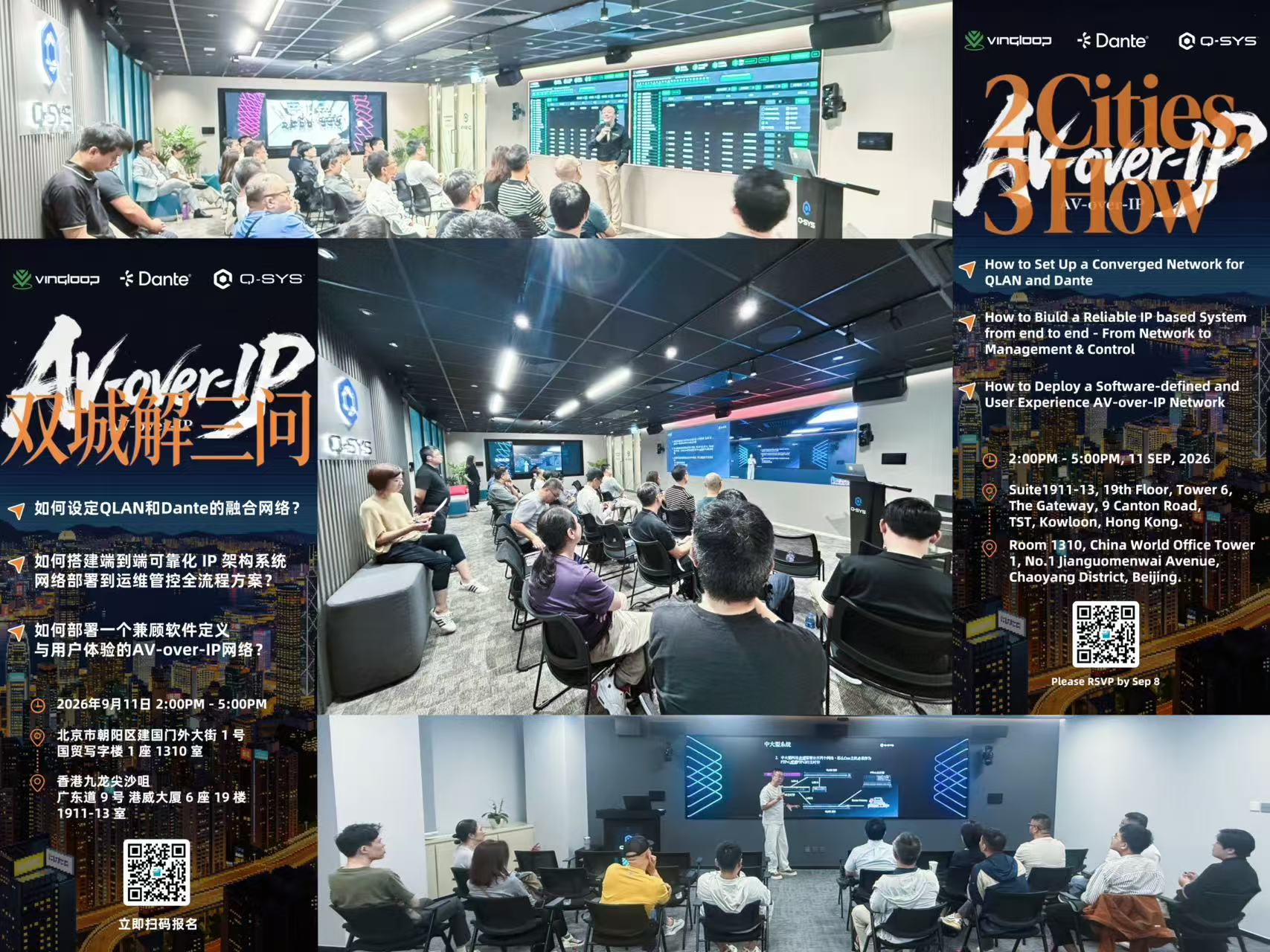
On September 11, the VINGLOOP × Dante × Q-SYS AV-over-IP technical exchange was held simultaneously in Beijing and Hong Kong.
From protocol convergence and network architecture to software-defined systems and management, the event focused on practical challenges encountered in real-world projects, helping industry professionals examine the key considerations involved in AV-over-IP system design, deployment, and operation.
The discussions centered on three core questions:
• How should a converged QLAN and Dante network be configured?
• How can a reliable end-to-end IP architecture be built, from network deployment through operations and management?
• How can an AV-over-IP network be deployed to balance software-defined capabilities with user experience?
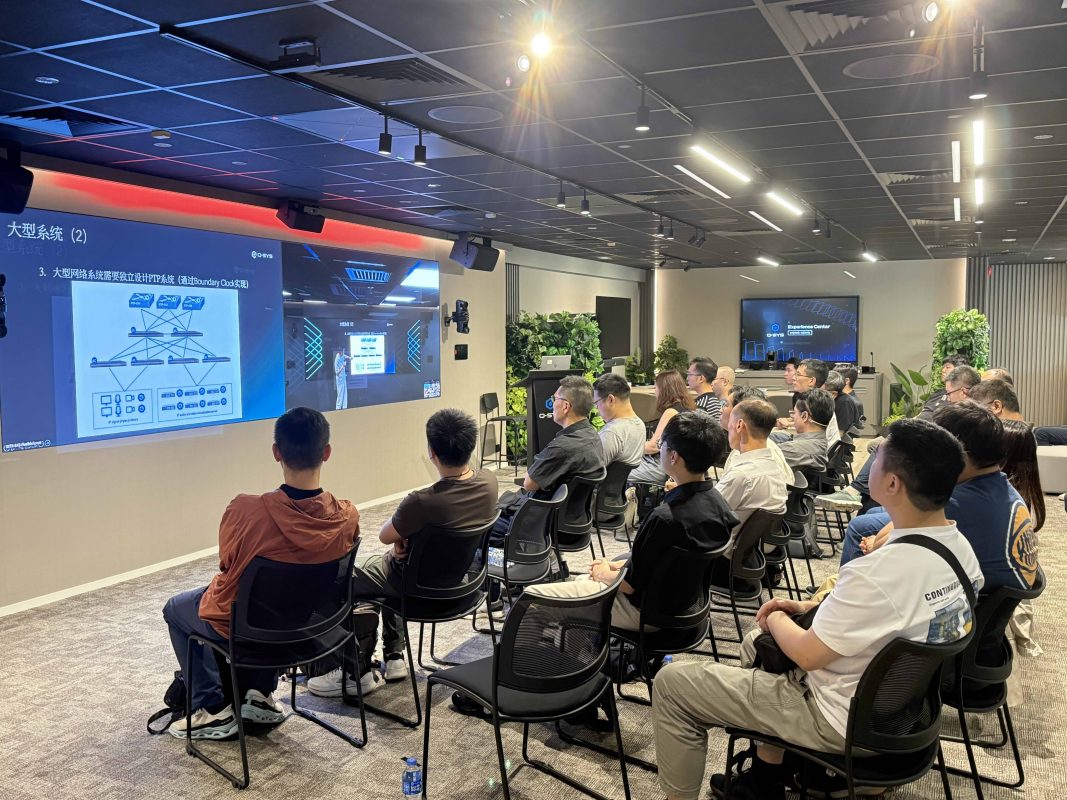
These three questions span the protocol, network, and system layers, reflecting a clear direction in today’s AV-over-IP projects: systems must do more than simply connect devices. They must also address multi-protocol coexistence, stable transmission, unified management, and software-driven integration.
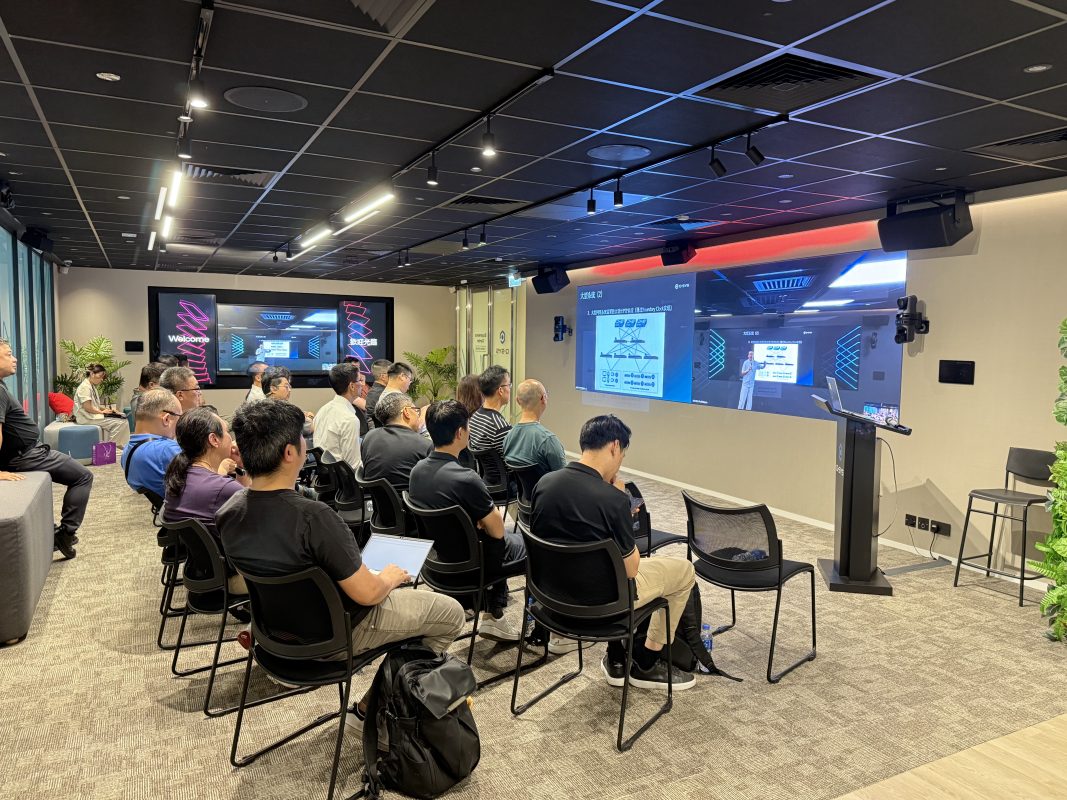
In a converged network, QLAN, Dante, and other AV services often share the same IP infrastructure. In this environment, the switch does far more than basic packet forwarding. Multicast management, QoS, clock-traffic prioritization, link status, and network visibility all directly affect system stability.
Enabling different services to coexist in an orderly way on the same network has therefore become a key consideration in professional AV network design.
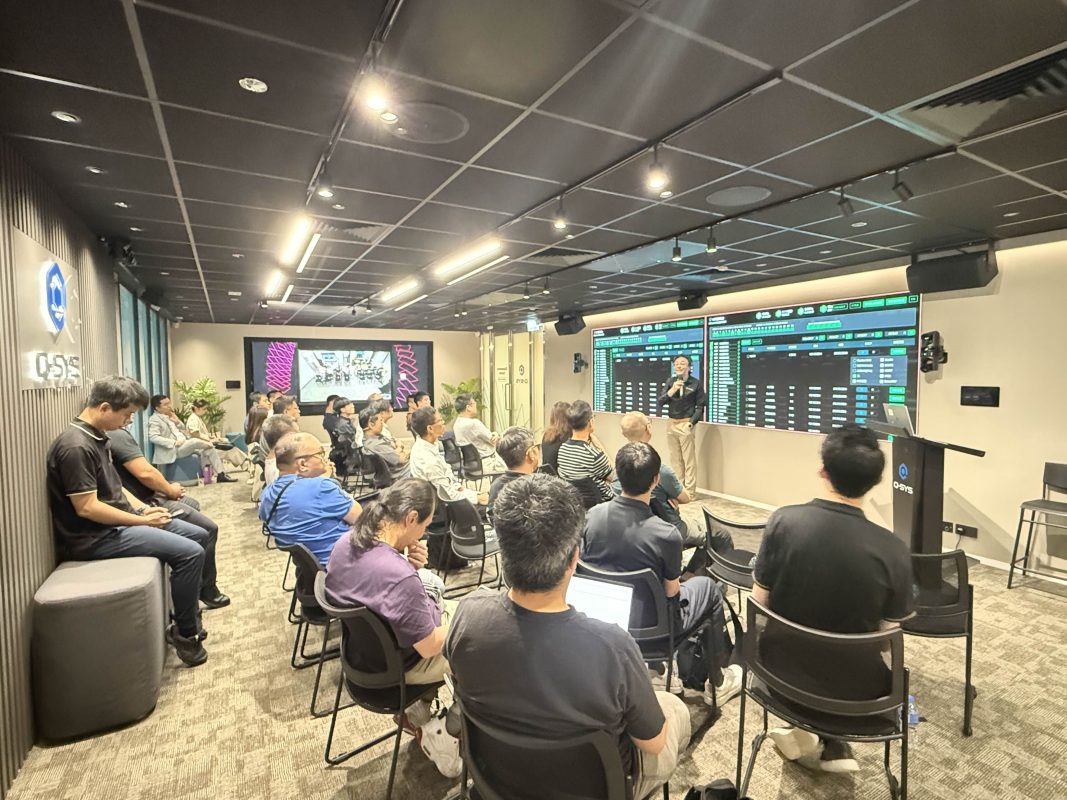
Beyond protocols and networking themselves, the exchange also explored end-to-end IP architecture.
A reliable AV-over-IP system needs to consider the relationship between access, switching, control, management, and ongoing operations from the earliest stages of network planning. As project scale increases, overall stability no longer depends on a single device or protocol, but on whether the complete network architecture remains clear and manageable throughout deployment, expansion, and operation.
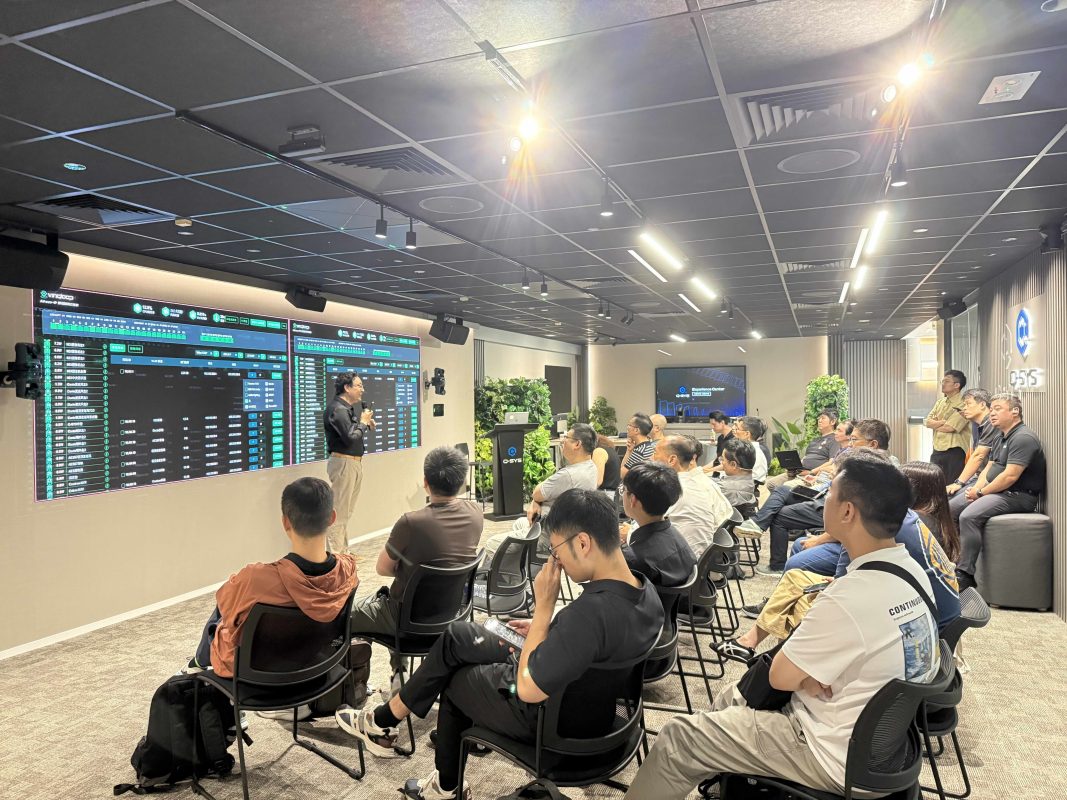
Software-defined AV was another important theme of the event.
When switches, audio systems, and control platforms can interact through software and APIs, device status, port changes, service traffic, and control requirements can be brought into a unified system logic. The network can then evolve from a pure transport infrastructure into an active part of device management, scenario-based automation, and control.
The goal is not to make the system more complex, but to use deeper technical coordination in the background to create a simpler and more intuitive front-end experience.
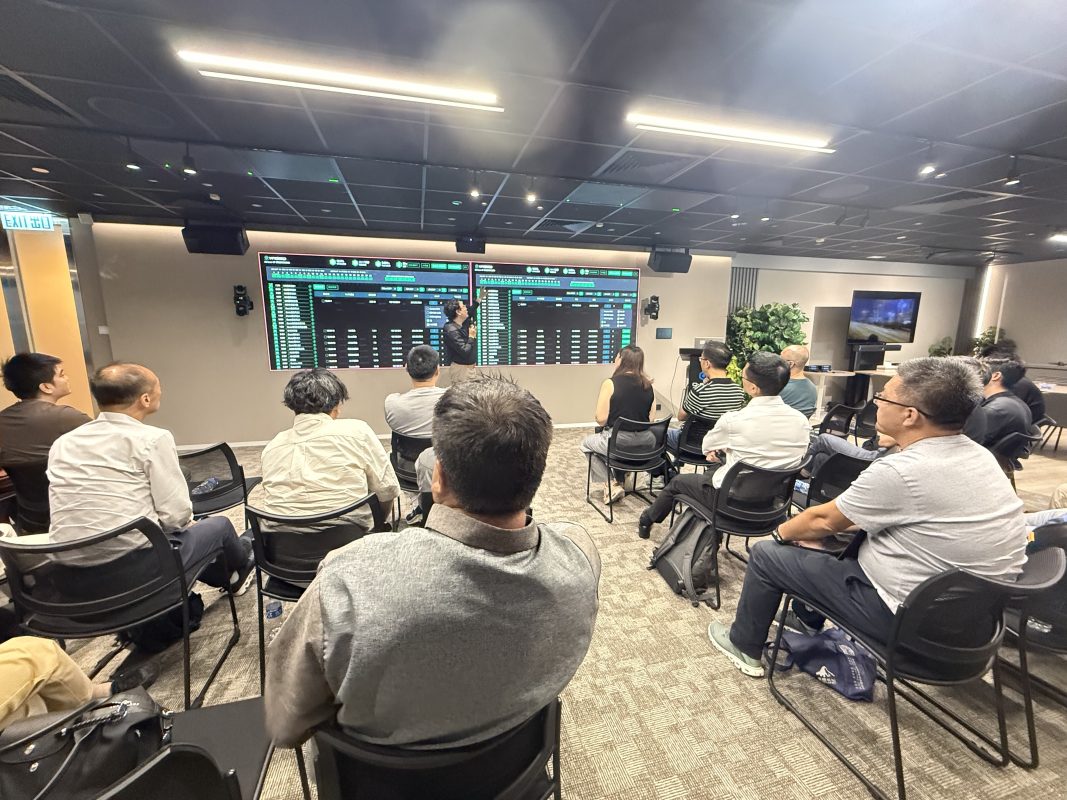
From QLAN and Dante convergence to end-to-end IP architecture and software-defined AV, the Beijing and Hong Kong sessions consistently focused on one central question:
How can increasingly complex AV-over-IP systems become more stable, easier to manage, and better aligned with real project requirements?
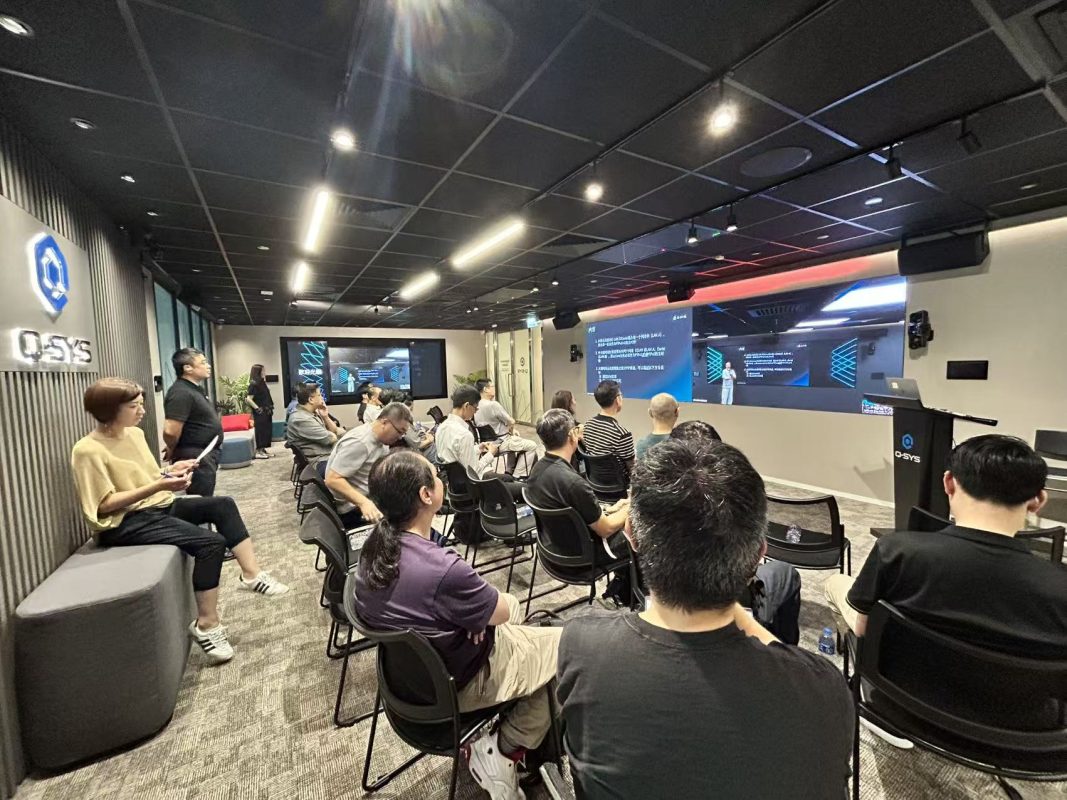 A simultaneous two-city exchange also created another opportunity to connect technologies and ecosystems. VINGLOOP focuses on AV network infrastructure and looks forward to continuing collaboration with Dante, Q-SYS, and more industry partners to explore AV-over-IP networks that are more open, reliable, and easier to deploy and manage.