


In networked AV applications, one question often comes up: can a standard data switch replace a professional AV-over-IP switch for audio and video networking?
The answer is no.
Standard data switches are primarily designed for conventional networking tasks such as internet access and office data traffic. They are not purpose-built for the specialized requirements of AV-over-IP systems, including mixed audio/video traffic, clock synchronization, multicast management, and multi-switch networking.
VINGLOOP AV-over-IP switches are purpose-built for networked AV applications. From visualized operation and low-level traffic optimization to open APIs and ecosystem compatibility, they provide a stable and reliable network foundation for professional AV systems.
ProAV Visual Interface for Simplified Network Operations
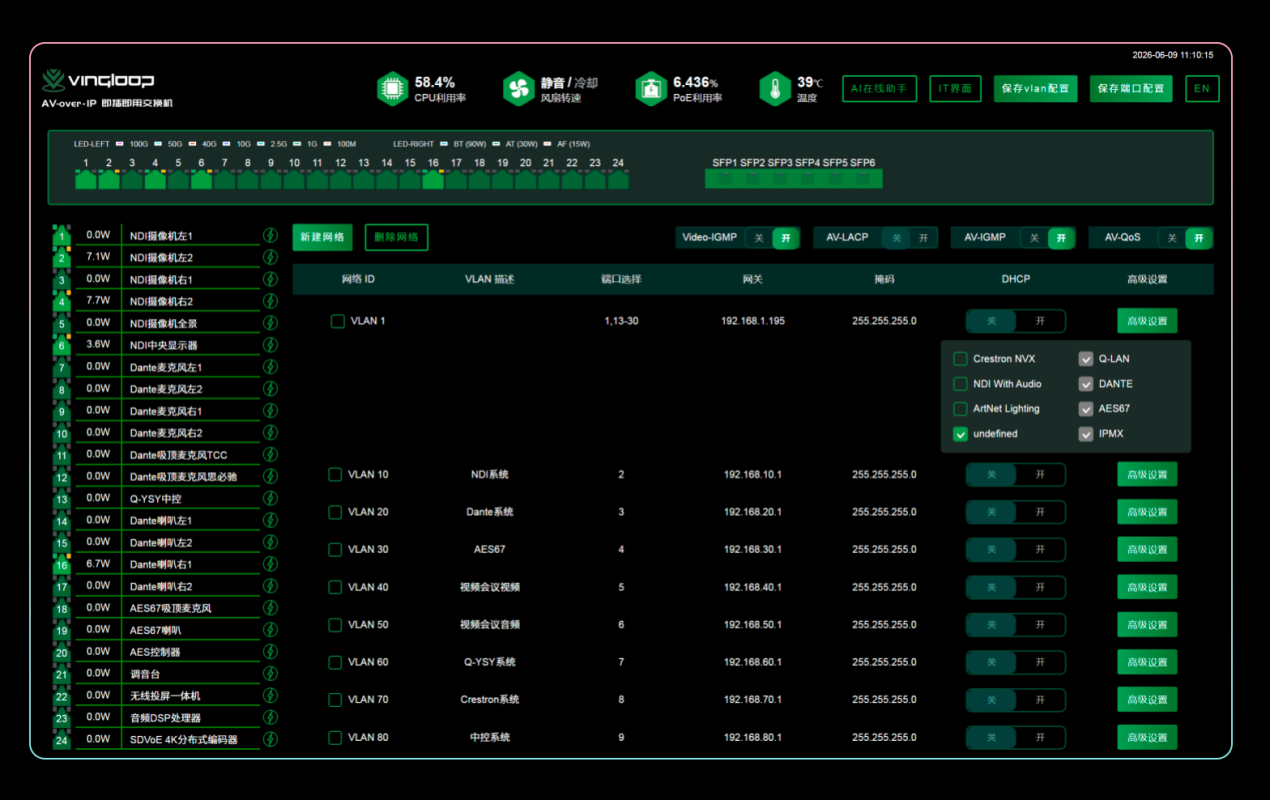
Compared with the more complex, general-purpose management interfaces of standard switches, VINGLOOP provides a dedicated ProAV interface that brings frequently used AV configuration and status information into one place, simplifying system commissioning and ongoing maintenance.
• Real-Time Device Status Monitoring
Visualize the connection status between AV endpoints and the switch, including online/offline status and connected ports, making network troubleshooting more efficient.
• One-Click AV Optimization
Enable or disable AV multicast and QoS optimization functions with a single click, without having to adjust complex parameters one by one, for faster deployment across different AV transmission scenarios.
• Rapid Creation of Dedicated VLANs
Quickly create dedicated AV VLANs and configure port assignments, gateways, subnet masks, DHCP, and other settings, reducing errors caused by repetitive manual configuration.
• Custom Device Information
Edit endpoint names, device types, and related notes to make it easier to manage NDI cameras, Dante endpoints, control systems, codecs, and other devices.
• Centralized System Status
View CPU utilization, PoE power consumption, device temperature, fan status, and other operating information from a single interface for clearer visibility into network health.
Four Low-Level Optimizations for Stable AV Transport
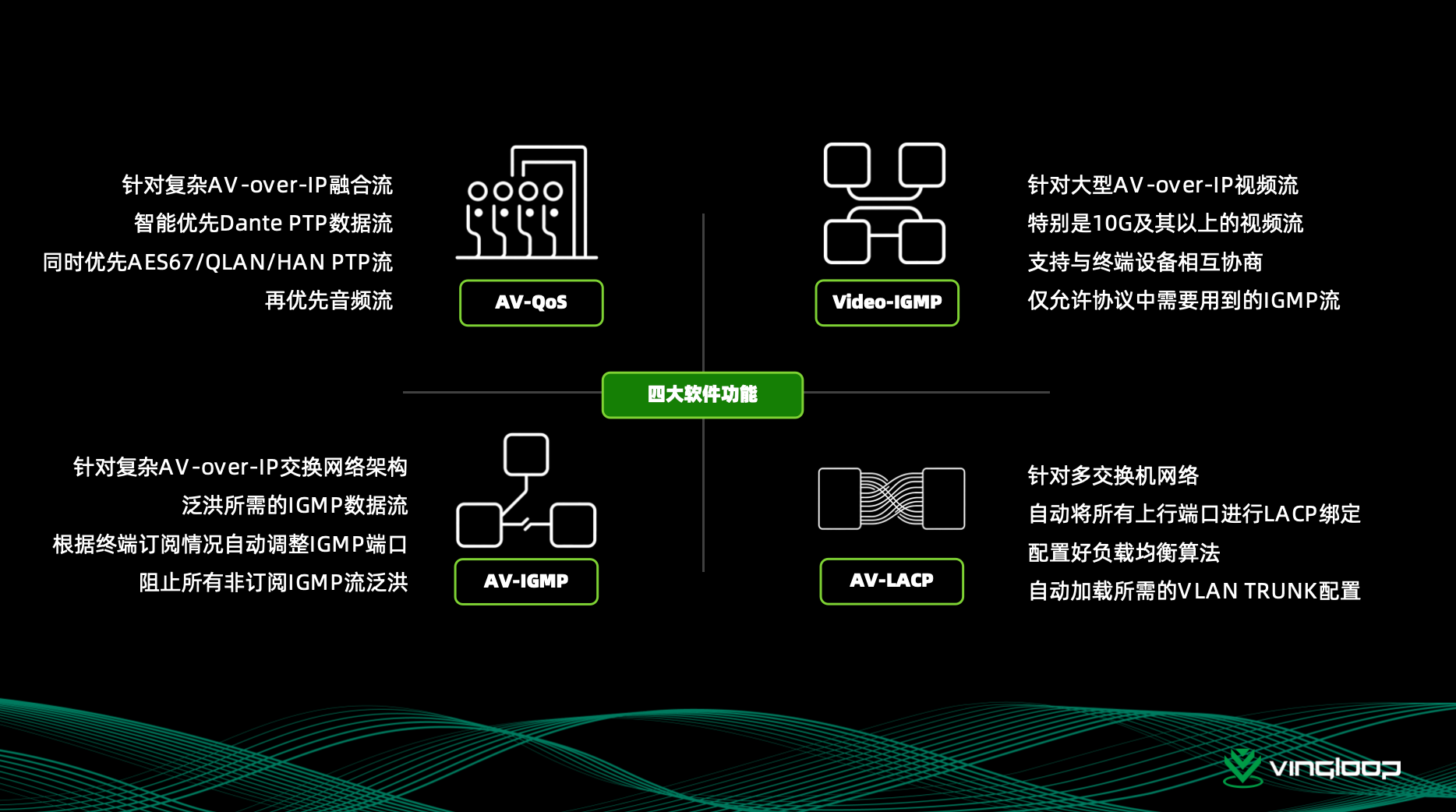
AV-over-IP systems often carry audio, video, control, lighting, and other data streams simultaneously. This can introduce challenges such as bandwidth contention, multicast flooding, clock synchronization issues, and increased complexity across multiple switches.
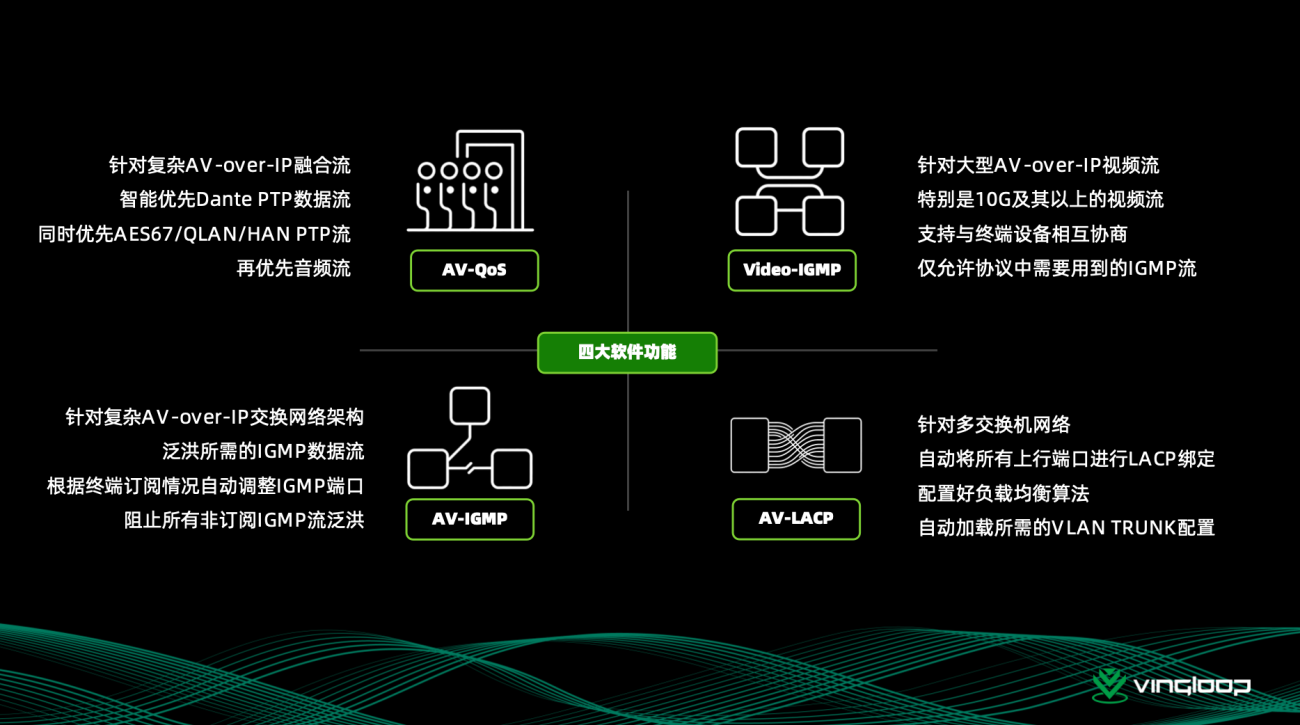
To address these professional AV transport requirements, VINGLOOP provides four low-level optimization functions, all of which can be enabled with a single click.
• AV-QoS Intelligent Priority Scheduling
For complex mixed AV traffic, AV-QoS intelligently identifies and prioritizes different types of data.
The system gives priority to Dante PTP clock synchronization traffic while also accommodating AES67, Q-LAN, HAN, and other PTP-based data and professional audio streams, helping reduce the impact of network congestion on critical services.
• AV-IGMP Professional Multicast Management
Automatically adjusts multicast forwarding rules based on the real-time subscription status of endpoints.
Multicast streams are forwarded only to endpoints that actually require them, while invalid and unsubscribed traffic is blocked to reduce multicast flooding and unnecessary bandwidth consumption.
• Video-IGMP Video-Specific Optimization
Designed for 10G and higher-bandwidth ultra-high-definition video applications, Video-IGMP can negotiate with endpoint devices and allow only the IGMP traffic required by the application.
In large-scale video networks, this helps reduce bandwidth pressure from unnecessary traffic and supports stable, long-duration UHD video transmission.
• AV-LACP Link Aggregation Optimization
For multi-switch cascaded networks, AV-LACP can automatically bind uplink ports with LACP and configure load balancing and VLAN Trunk settings.
This avoids complex switch-by-switch configuration while expanding available bandwidth, improving link redundancy, and simplifying deployment in large-scale networks.
Open API Architecture for Software Integration
Built around the concept of Software-Defined AV, VINGLOOP provides free and open API interfaces that can integrate with mainstream AV control platforms, management software, and VINGLOOP’s own management platform.
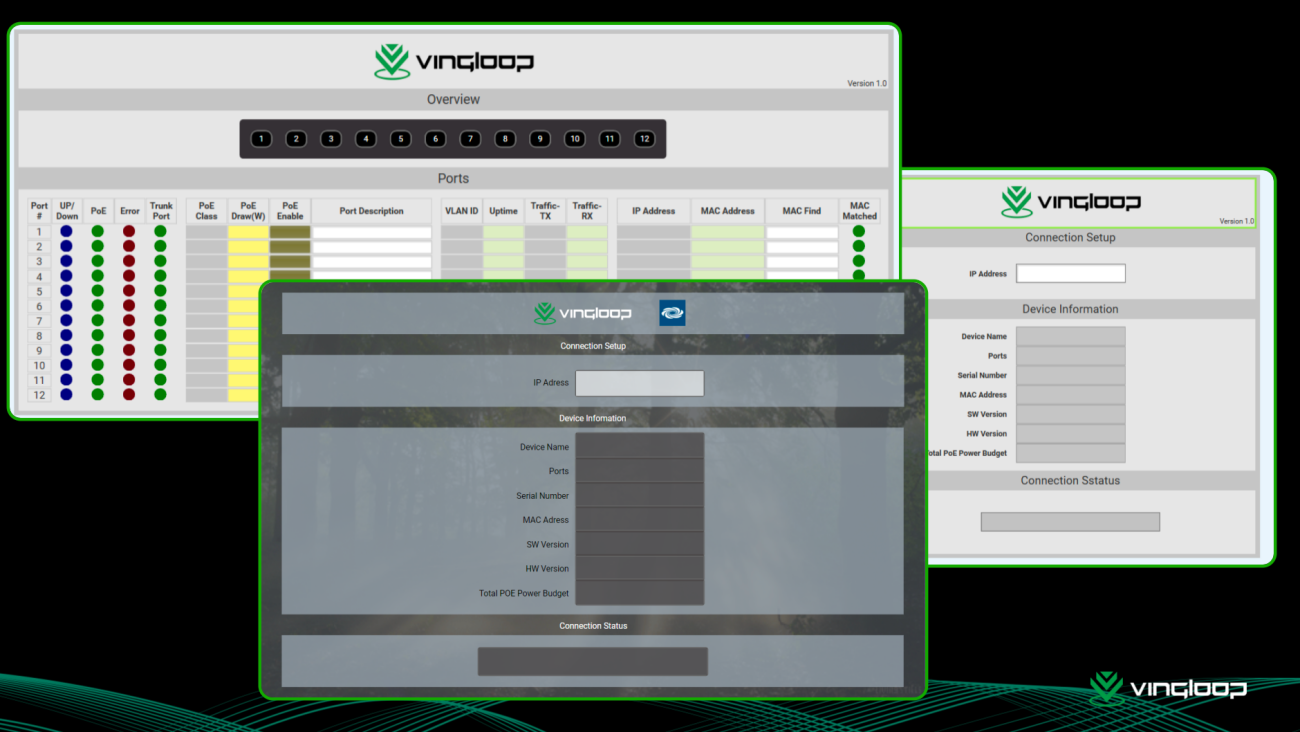
Through the API, third-party systems can read or call a range of switch information, including:
• Device and port operating status
• PoE power delivery and consumption information
• VLAN and network configuration
• Port traffic statistics
• IP and MAC address information
This network information can become part of the project’s existing software workflow for centralized device management, scenario-based control, and automated scheduling. The switch is therefore no longer limited to its own management interface, but can function as a foundational component that software can identify, access, and manage.
Broad Ecosystem Compatibility for System Integration
AV-over-IP projects typically involve multiple brands, protocols, and endpoint devices. Smooth connectivity and interoperability between them directly affect both system deployment and long-term operation.
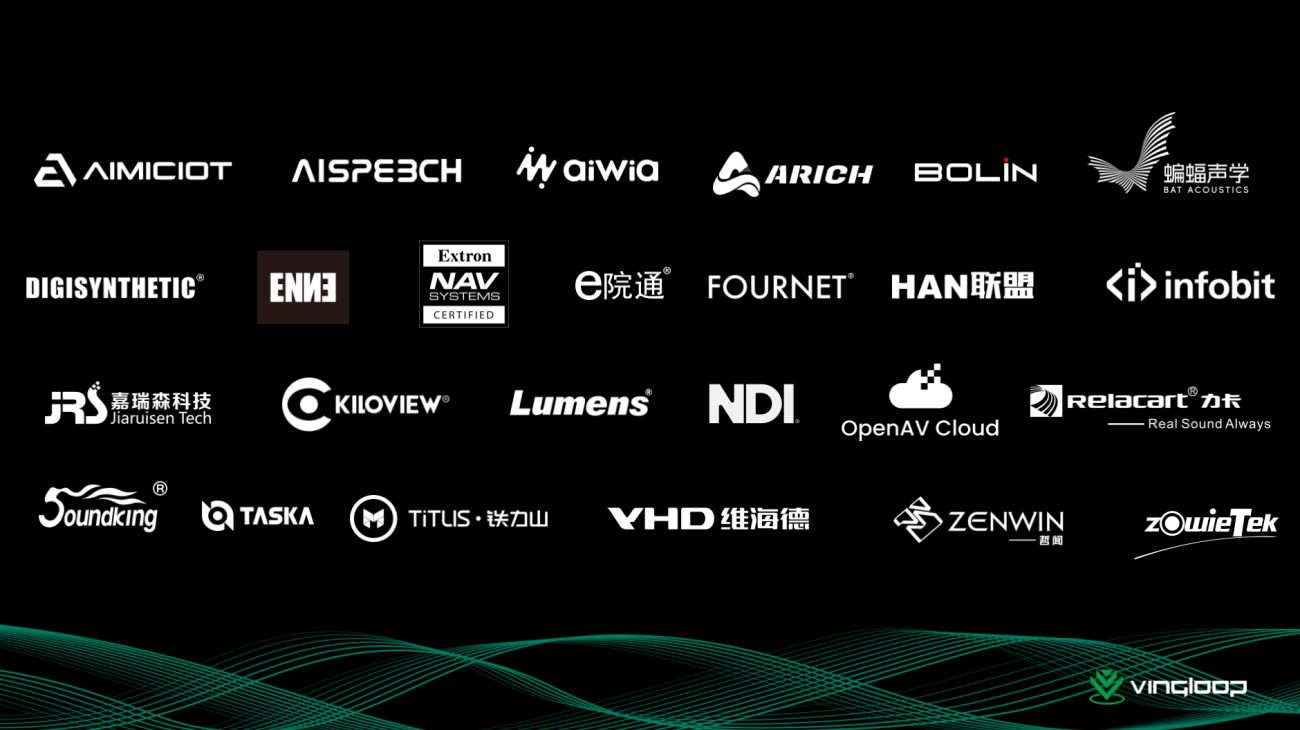
VINGLOOP AV-over-IP switches continue to expand compatibility with mainstream AV devices, software platforms, and industry standards worldwide. From low-level network protocol integration to coordination between control platforms and endpoint devices, this helps reduce compatibility and integration issues across different brands and systems.
By continuously expanding its ecosystem compatibility, VINGLOOP provides a stable and reliable network foundation for professional AV applications including government and enterprise meeting spaces, command and control environments, performance venues, and smart exhibition spaces.
VINGLOOP focuses on AV network infrastructure. The value of a professional AV switch goes beyond forwarding data: it lies in simplifying network configuration, providing clear visibility into device status, reliably carrying multiple AV services, and integrating naturally into the system’s overall management and control workflow.